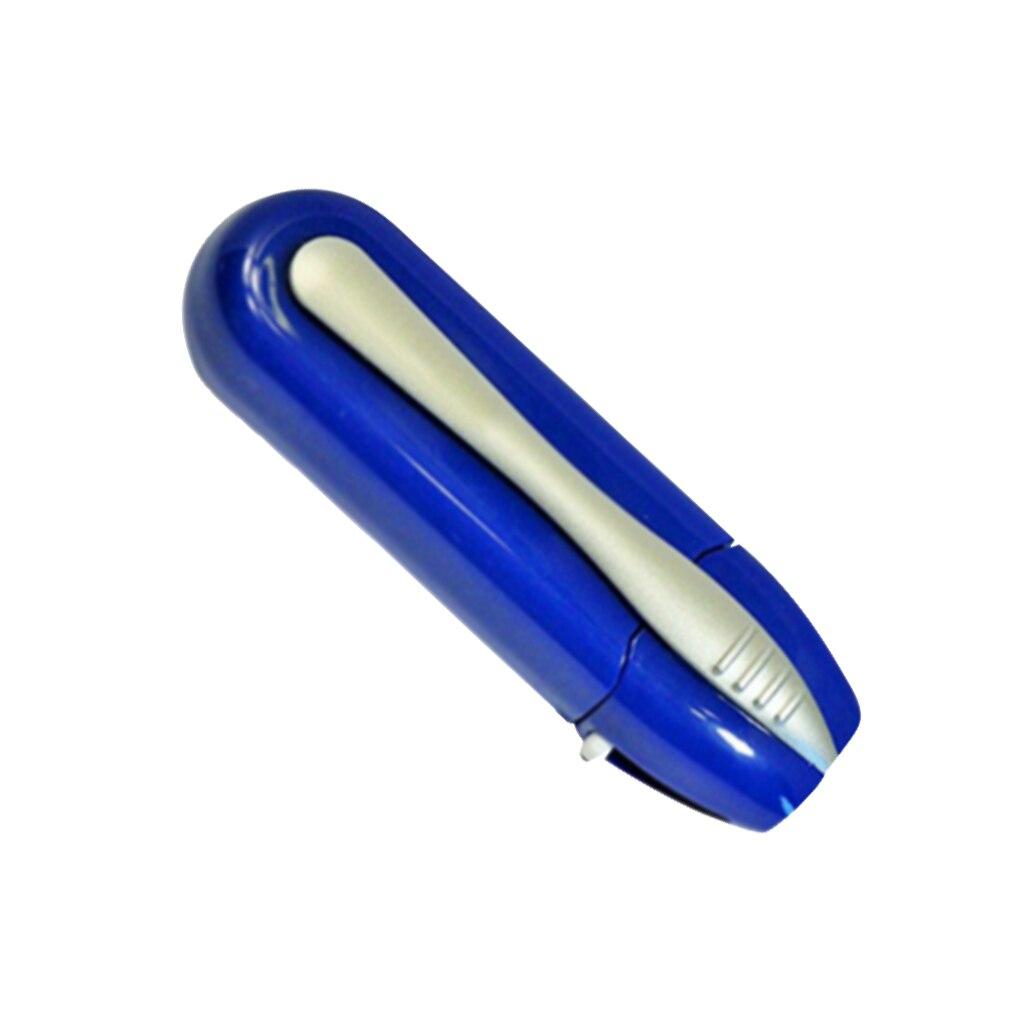
Professional Dry Carbon Eyeglass Lens Cleaner – Streak-Free, No-Liquid Cleaner for Glasses, Sunglasses, Screens & Camera Lenses, Pocket-Sized Reusable Optical Cleaning Tool
Professional Dry Carbon Eyeglass Lens Cleaner – Streak-Free, No-Liquid Cleaner for Glasses, Sunglasses, Screens & Camera Lenses, Pocket-Sized Reusable Optical Cleaning Tool
Couldn't load pickup availability
Your shirt is not cleaning your glasses. It is grinding the smudge in.
Everyone does it. Lift the hem, wipe, hold them up to the light, and find the same haze slightly rearranged. Cotton drags skin oil around the lens rather than lifting it off, and it pushes whatever grit was sitting there across a coated surface. Breathing on them first only spreads it further.
This is a dry carbon cleaner. The carbon film on its pads lifts the oil away instead of smearing it, so the lens comes out genuinely clear in a few seconds, with no liquid, no drying streaks and nothing abrasive on the coating.

Both sides of the lens, in one pass
It is a pincer, not a wipe. Two arms close over the lens with a soft carbon pad on each face, so the side you can see and the side against your eye are cleaned together, in the same sweep. The pads are contoured to the curve of a lens, which is why they keep contact right into the edge of the frame where a folded cloth normally skips.

The brush end is the part that saves your coating
Nothing scratches a lens like a grain of sand under whatever you are cleaning with. The other end of the tool is a soft brush, and it is there so you can flick the loose stuff off before anything touches the glass. Use it every time and you are lifting oil rather than sanding a coating. Most people skip this step because their shirt does not come with one.

Nothing to leak, nothing to run out of
Spray bottles leak into a bag, empty at the wrong moment and leave a film as they dry. There is no liquid here at all. The cleaner snaps into its own capsule case between uses, which keeps the pads clean in a pocket and re-coats them ready for the next lens. The whole thing is about 3.7 in long, so it lives in a jacket, a handbag or a glove box rather than in a drawer at home.

What it handles
- Fingerprints, skin oils, makeup and the everyday haze that builds up over a day
- Anti-reflective, polarised and tinted lenses, glass or plastic
- Prescription glasses, readers, sunglasses, safety glasses and ski goggles
- Phone screens, camera lenses and watch faces
Glasses are not the only thing that goes cloudy
Press one pad flat and it works the same way on a phone screen, a camera lens or a watch face. That is usually what turns it from something you bought for your glasses into something you reach for a few times a day, which is also why the second one tends to end up on a desk.

How to use it
- Brush the loose grit off first with the brush end. This is the step that protects the coating.
- Pull the tool out of its case and clip the two pads over the lens.
- Sweep gently from the centre outward, a few passes per lens.
- Snap it back into the case, which re-coats the pads for next time.
Keep it dry. Do not use it on a wet lens and do not wash the pads. Water is what ruins the carbon film.

In the box
- One dry carbon lens cleaner with its pads already fitted
- Its snap-on capsule case, about 3.7 in (9.5 cm) long
- An instruction card
- Four colours: gold, purple, black and blue
Buy two. That is the actual advice.
The one that lives in the glove box is the one you use. Most people end up wanting a second for a desk, a bag or a jacket, because the entire point is that it is within reach at the moment the lens goes cloudy, rather than at home next to the spray bottle.

Frequently asked questions
Will it damage an anti-reflective coating?
The pads are soft and non-abrasive and the tool is made for coated lenses. What actually takes a coating off is grit, so use the brush end first, every time.
Does it need refills or spray?
No. There is no liquid in it and nothing to top up. Capping it between uses is what keeps the pads working.
Does it work on phone screens?
Yes. Screens, camera lenses and watch faces all clean the same way, using one pad pressed flat instead of clipping both over a lens.
What if the lens is genuinely dirty rather than smudged?
Rinse heavy dirt, salt or spray off under water and let the lens dry completely first. This is a dry tool for oils and smudges, not a substitute for washing mud off.
Can I clean the pads?
Do not wash them. Water is what ruins the carbon film. Brush the lens first and cap the tool afterwards and the pads look after themselves.
Which colour should I choose?
Purely preference. Gold, purple, black and blue are the same cleaner in a different case.