Push Lawn Sweeper - 26 in Sweeping Path, 7 cu ft Mesh Hopper, Four Spinning Brushes, No Fuel or Cord
Push Lawn Sweeper - 26 in Sweeping Path, 7 cu ft Mesh Hopper, Four Spinning Brushes, No Fuel or Cord
Couldn't load pickup availability
Four brushes, geared off the wheels
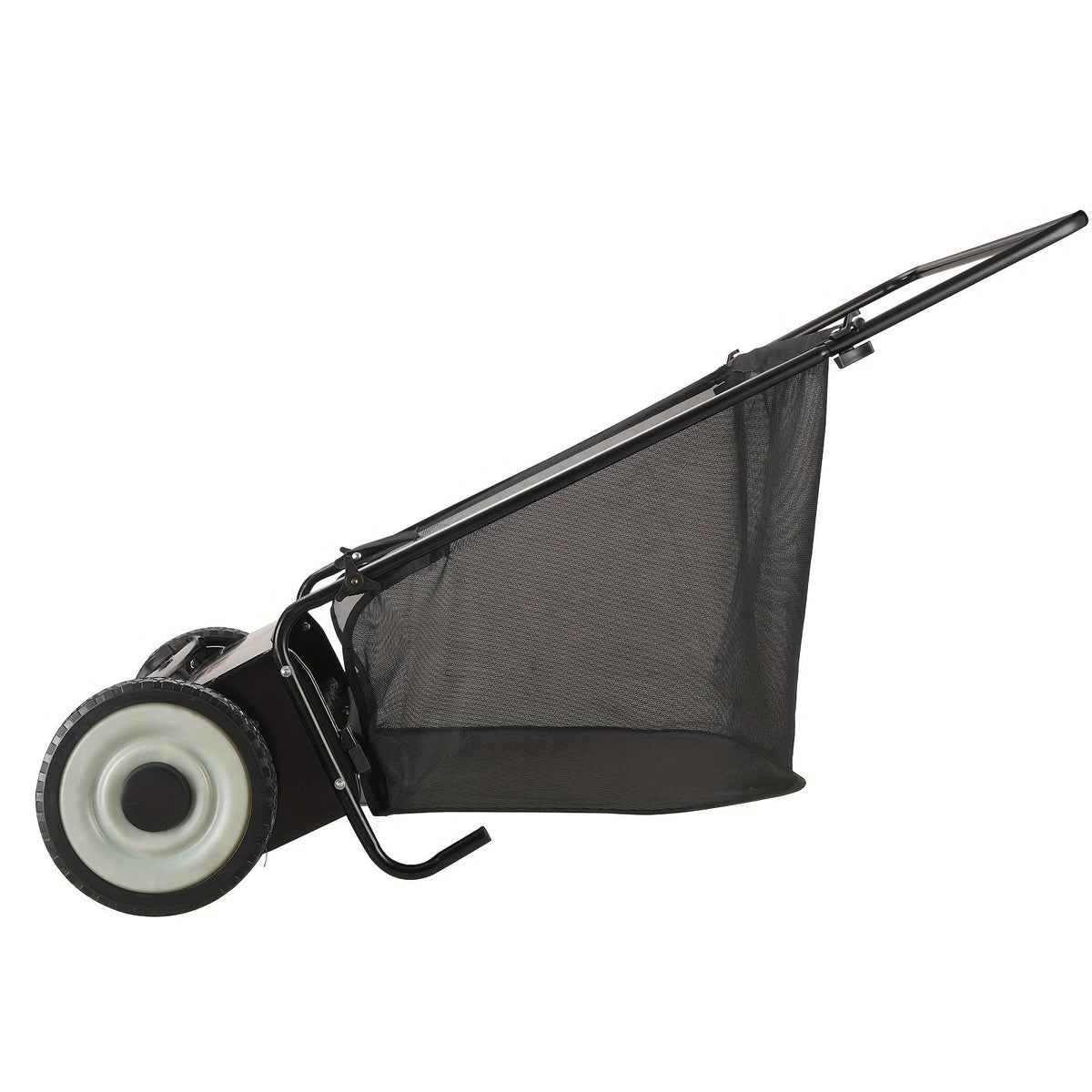
There is no engine, no motor, no cord and no battery in this machine. When you push it, the two road wheels drive a drum carrying four rows of stiff plastic bristles, and the drum flicks leaves, clippings, pine needles and small twigs up and back into the mesh bag behind you.
The gearing is 50:12, so the brush drum turns a little over four times for every single turn of the wheels. That is what makes it work at walking pace rather than needing you to run - the brushes are always moving much faster than you are.
It is quiet, because there is nothing running but you. That is a real advantage over a blower at eight on a Sunday morning, and it is also the honest catch: you are the engine. Buyers describe it as a decent walk, not a chore, but it is a walk.

26 inches - the number this page never used to give you
Sweeping width is the spec that decides how long the job takes, and the old version of this listing did not state it anywhere. It is 26 in (66 cm), measured across the brush drum on the maker's own dimension drawing.
That is a cleared strip a little wider than your shoulders on every pass. Against a rake it is not close; against a 21 in mower deck, you will find yourself walking a similar pattern in fewer passes.
Behind it, the hopper holds 7 cubic feet (198 liters) of collected debris in a tear-resistant non-woven mesh bag. The mesh matters more than it sounds: it breathes, so a bag of damp leaves does not sit and sour, and you can see the level without stopping. Lift it off the frame and tip it out.

Plastic or steel? Both - and here is which is which
The old page contradicted itself on this. The description promised "thickened steel pipes" while the specification block underneath said, flatly, "Material: Plastic". Both cannot describe the same frame, and a buyer paying for a steel-framed machine who receives a plastic one has a genuine grievance. So we went and checked, component by component.
The "Material: Plastic" line was not describing the machine at all. It was a collapsed version of two separate fields in the supplier's data feed - "Head Material: Plastic" and "Handle Material: Plastic" - which describe the brush head and the handle, not the frame. Read as a statement about the whole sweeper, it was simply wrong.
- Frame and handle - painted iron tube, per the maker's specification. The brush housing across the front is painted sheet metal. This part of the old copy was right.
- Bristles - polypropylene. Plastic, and correctly so; that is what a sweeper brush is made of. They are bolted to bright zinc-plated steel bars on the drum.
- Wheels - 10 in (25.4 cm), built as a plastic hub with a rubber tread. Not solid rubber, and the old page's unqualified "10-inch rubber wheels" overstated it.
- Hopper bag - tear-resistant non-woven fabric on the steel tube frame.
The brush height is set by a knob on the side, by hand, with no tools. The maker publishes conflicting numbers for how many positions that knob has - five in one place, ten in another - so we are not going to print a figure we cannot pin down. What matters is that it adjusts freely and that you will need to find your setting.
And that setting matters more than it sounds, because of how the machine drives. The brushes are turned by the wheels, through friction with the ground. Set them too low and the bristles dig into the turf, the wheels start to slip instead of grip, the drum slows down, and it becomes both hard to push and worse at picking up - the two complaints owners make most often, and they are usually the same problem. Set it a notch higher and it rolls.

What it will not do
The old page called this "built for all terrains", said it captured "even stubborn debris in one smooth push", and offered "professional-grade results with every pass". None of that survived checking, and all of it has been taken off. Here is the real envelope, from the maker's own guidance and from what buyers report.
- Wet leaves and wet grass. The maker states plainly that wet leaves reduce sweeping efficiency. Work a dry lawn if you can.
- Long grass. Pickup drops off when the grass is long. It is at its best on a lawn that has just been cut.
- Uneven ground. This is the most common criticism buyers make. The brushes need consistent contact, and dips and bumps break it.
- Gravel and artificial turf. Not for either. On gravel a brush sweeper will happily throw stones into the bag; the maker does not recommend it on artificial turf.
- Big, heavy debris. Large pine cones are difficult, and heavy litter takes a second pass. Pick the big sticks up before you start - twigs are the thing that jams the drum.
- Slopes. The maker sets a limit of 30 degrees and tells you to work across a slope rather than up and down it. On a crowned or sloping lawn the wheels lose grip and pickup falls away.
- Weather. Do not store it out in the rain. It is painted steel and a fabric bag.
On how much it actually picks up, we will use the maker's own number rather than ours: they claim it sweeps "up to 80% of leaves and grass clippings in a single pass". That is their figure, it is an "up to", and it is a fair description of the machine - which is precisely why "captures even stubborn debris in one smooth push" had to come off the page. Plan on a second pass over the worst patches.
Two further things we have removed rather than defended. "Perfect for hotels, farms and restaurants" is gone: at about 28 lb this is a domestic garden tool, it carries no commercial-duty rating, and we are not going to imply one. And "eco-friendly" is gone too - it needs no fuel, cord or battery and it makes almost no noise, which are specific and true, whereas "eco-friendly" on its own is a claim we cannot substantiate.
Where it is genuinely good: dry leaves, fresh grass clippings, pine needles and small twigs, on a flat lawn. That is most of what most people need it for.
Living with it
- Assembly takes roughly twenty minutes. Be warned: the instructions are pictures rather than words, and they are the single most criticised thing about this machine. There are step-by-step assembly videos online and they are worth five minutes of your time.
- The handle frame folds down for storage, but it is still a bulky object - measure your shed or garage wall before you buy.
- If it starts squeaking after a few sessions, a squirt of light oil on the axle ends is all it wants.
- The bag fills faster than you expect on a heavy leaf day. That is the 7 cubic feet doing its job, not a fault.
- At a hip-height handle bar, very tall users have found the reach a little short.
- It can throw a little debris back towards you on a windy day. Eye protection is not a silly idea, and the maker recommends it.
The details
Who it is for
Someone with a flat lawn big enough that raking it has stopped being reasonable, and who does not want to buy, fuel, store and listen to a machine with an engine in it. It is at its best used the way most owners describe it: every time you mow, and hard through leaf season.
If your ground is rough, gravelled or usually damp, or if you need something that will clear a commercial site day after day, this is the wrong tool and we would rather say so now than take the return.